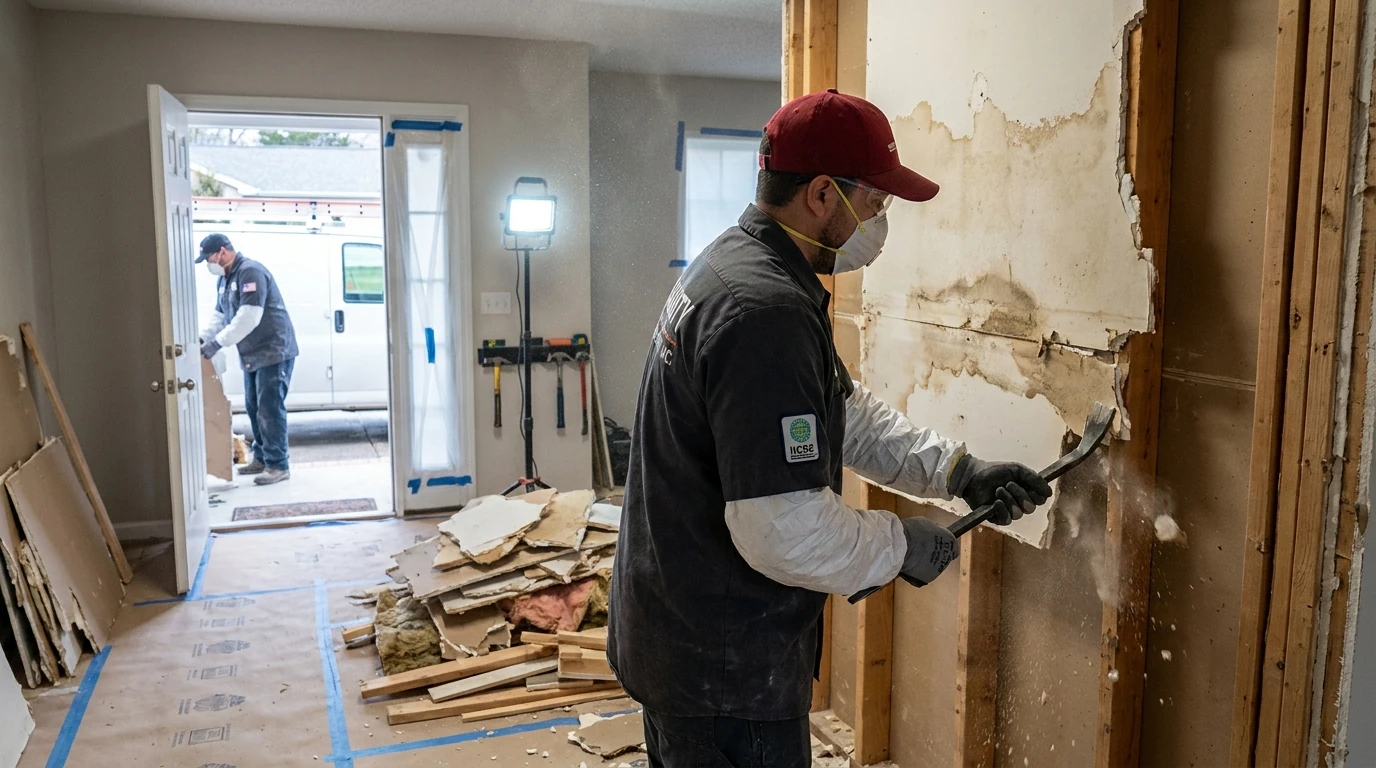
Large-loss restoration jobs, the kind involving major water damage, fire damage, or storm damage, almost always start with demolition. Before anything gets rebuilt, damaged drywall, flooring, insulation, and framing have to come out. It’s dusty, physical work, and it sets the tone for everything that follows. When a homeowner is living through that phase of a huge project, the crew’s conduct on site matters as much as their technical skill.
Here’s what one homeowner, Denise, wrote about her experience during the demolition phase of her project:
There are not enough adjectives to describe how fabulous Luis and his crew have been during the demolition phase of this job. Luis leads by example for professionalism, skill, safety, punctuality, clean up, and even humor to keep us smiling during a difficult time. We look forward to Luis returning for the next phase of this project, continued excellence provided by Luis and this company, as well as the speedy completion of this huge job.
Denise, verified Google review
What “leads by example” actually means on a demo crew
On a demolition crew, leading by example means the foreman is the first one suited up and the last one to leave, setting the pace for safety and quality instead of just supervising from a clipboard. That matters because demo work involves real hazards: dust containment, sharp debris, exposed nails, and sometimes hidden electrical or plumbing lines behind the walls being opened up.
A good foreman walks the space before tools come out, flags anything unexpected (a hidden pipe, old knob-and-tube wiring, a section of subfloor that’s rotted further than expected), and adjusts the plan on the spot rather than pushing through. That’s also where the “skill” Denise mentions shows up, knowing which materials can be selectively removed and which need to come out entirely, and doing it without damaging the parts of the structure that are staying.
Why safety and clean-up show up together in reviews like this
Safety and daily clean-up are connected because a demo site that isn’t cleaned up at the end of each day becomes a safety hazard the next morning. Dust barriers, floor protection, and swept debris aren’t cosmetic extras, they’re part of how a crew keeps a job site livable for a family still occupying part of the home.
On a project of any real size, that discipline has to repeat daily for weeks, not just look good on day one. Homeowners notice when a crew treats their house like it’s still a home and not just a job site, which is likely why punctuality and clean-up made it into Denise’s review right alongside safety and skill.
Why Denise is looking forward to the “next phase”
Denise’s review points to something specific: demolition is rarely the whole project, it’s the phase that has to happen before reconstruction can start. On a large loss, the same company that handles the teardown typically needs to carry the file into framing, drywall, flooring, and finish work, because the reconstruction plan depends on exactly what the demo crew found once the walls opened up.
This is the practical case for One Call Does It All: one phone call to QCI Restoration covers the entire loss from A to Z, emergency mitigation, water and fire cleanup, plumbing, and the complete rebuild, so a homeowner isn’t handing off a file to a second contractor who has to relearn the job from scratch. Denise wanting the same crew and the same company back for the next phase is exactly what that model is built to deliver.
What this means if you’re facing a similar project
If you’re staring down a demolition phase on your own home, the process usually runs in this order: a walkthrough to scope what has to come out, containment and protection of the areas that aren’t affected, the actual teardown with daily debris removal, and then a handoff into the rebuild plan. A crew that documents what they find as they go (moisture readings, photos of framing condition, notes on anything unexpected) makes that handoff faster and keeps the reconstruction estimate accurate instead of full of change orders later.
If your project is large enough to need a dedicated demo phase, ask upfront whether the same company will carry the job through reconstruction. Coordinating that yourself across separate contractors adds time and risk to a project that’s already disruptive.
QCI Restoration serves Auburn and surrounding Massachusetts communities including Worcester, Shrewsbury, Westborough, and Framingham. If your project involves water damage, fire damage, or storm damage that’s headed toward a demolition and rebuild, request a project assessment and get a written scope before work begins.