If a pipe just let go behind your washing machine or your basement toilet is backing up at 11 p.m., you need a number before you need a lecture. In Massachusetts, emergency plumbing calls typically run $150 to $5,000 or more, depending on what broke, when it broke, and whether water already got into the walls or floor.
A simple after-hours clog costs far less than a burst pipe behind a finished wall. This guide breaks down what homeowners across Worcester County and the MetroWest towns actually pay, what pushes the number up, and what your homeowners policy will and won’t pick up.
How Much Does Emergency Plumbing Cost in Massachusetts?
Most Massachusetts homeowners pay between $150 and $1,500 for a single emergency plumbing visit, with larger jobs like a failed water heater or a main sewer line backup running higher. The final number depends on the scope of the repair and how much of the home it reaches.
| Scenario | Typical Cost Range |
|---|---|
| After-hours diagnostic / service call | $150 - $350 |
| Clogged drain or toilet, emergency snake | $250 - $500 |
| Burst or frozen pipe repair (accessible) | $500 - $1,500 |
| Water heater failure, emergency replacement | $1,200 - $3,500 |
| Sump pump failure or replacement | $600 - $1,800 |
| Main line or sewer backup repair | $1,500 - $5,000+ |
These are typical industry ranges for Massachusetts, not a quote. A pipe behind drywall costs more to reach than one under a sink, and a job that’s already caused standing water adds a separate mitigation cost on top of the plumbing repair itself.

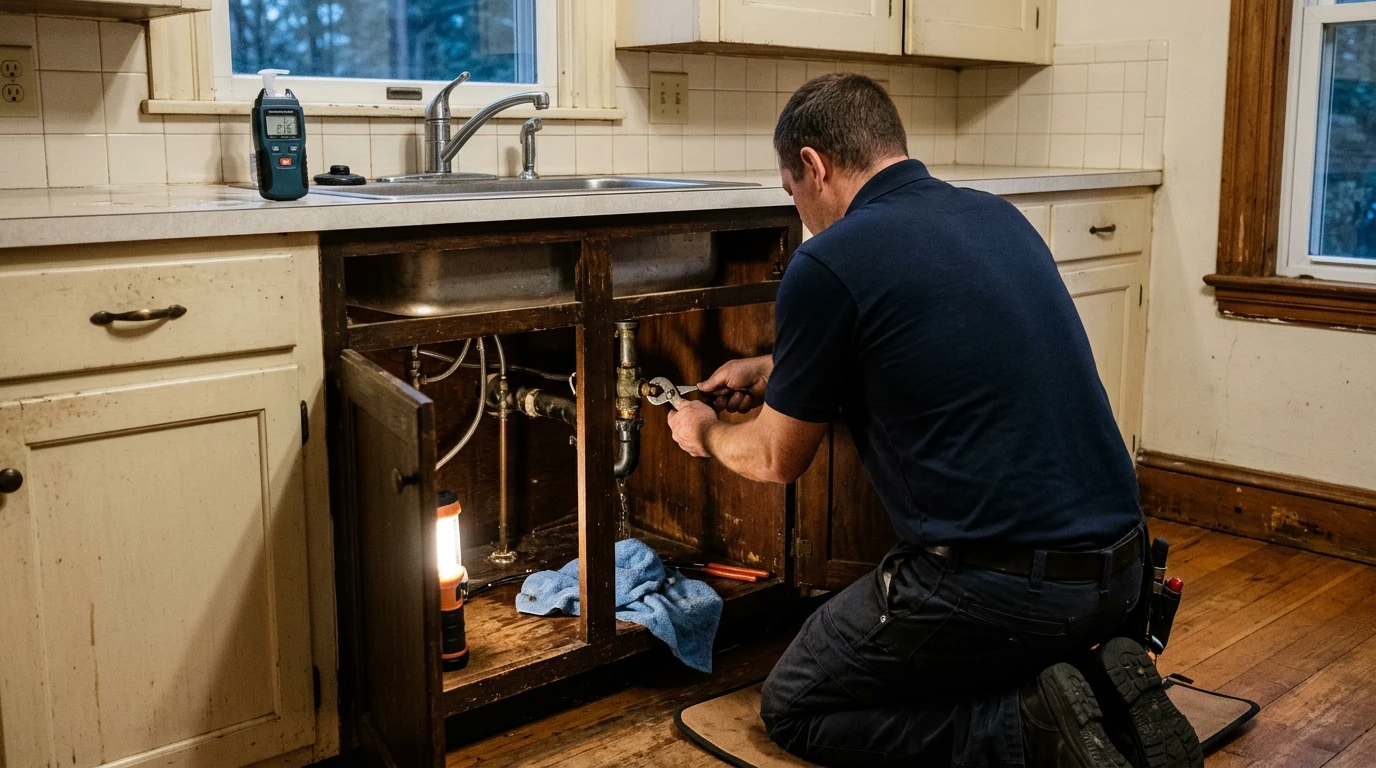
Recent job photo from QCI Restoration.
What Factors Drive the Cost of an Emergency Plumbing Call?
The time of day, the pipe’s location, and how much water already escaped are the three biggest cost drivers on any emergency plumbing job. Each one can move the final bill by hundreds of dollars.
Timing. Nights, weekends, and holidays carry an after-hours premium almost everywhere, including Central Massachusetts. A Tuesday afternoon call and a Saturday 2 a.m. call for the same leak rarely cost the same.
Accessibility. A leak under a bathroom sink is a quick fix. A pipe inside a finished ceiling or behind a slab means cutting and patching, which adds labor and materials.
Pipe material and home age. A lot of the housing stock around Auburn, Worcester, and the surrounding towns still has original galvanized steel or cast iron plumbing. Older pipe is more likely to fail at a joint and can be harder to match during repair than modern PEX or copper.
Water damage already present. If a pipe has been leaking for even a few hours, you’re no longer paying for a plumbing repair alone. You’re also paying for extraction, drying equipment, and possibly drywall or flooring replacement, dried to the standard set by the IICRC S500 for water damage restoration.
Does Homeowners Insurance Cover Emergency Plumbing Repairs?
Most homeowners policies do not cover the cost of fixing the plumbing itself, but they typically do cover the sudden water damage the failure causes. Insurers generally treat the plumbing fix as a maintenance item and the resulting water damage as a covered loss, as outlined in the Insurance Information Institute’s guide to what’s covered.
That distinction matters. A burst supply line that soaks a kitchen floor is usually a sudden, accidental event, so the drywall, flooring, and drying costs are often covered. The $400 it took to actually repair the broken pipe usually isn’t. Gradual leaks, worn-out fixtures, and slow seepage are typically excluded entirely, since insurers expect routine maintenance to catch those before they become a claim.
If you’re not sure where your situation lands, our post on whether homeowners insurance covers water damage walks through the sudden-versus-gradual distinction in more detail. Either way, photograph the damage before cleanup starts and keep every receipt. That documentation is what protects the claim.
What Happens When You Call for Emergency Plumbing?
A proper emergency plumbing call follows a predictable sequence: shut off the water, diagnose the failure, stop the leak, then address any water that already got into the structure. Skipping steps is usually what turns a $500 repair into a $5,000 one.
- Shutoff and triage. The first priority on the phone is finding the main shutoff valve, or the fixture’s individual shutoff, to stop the flow before anyone arrives.
- Diagnosis. A technician traces the failure to its source, whether that’s a split supply line, a failed valve, or a backed-up main.
- Repair. The broken section gets cut out and replaced, or the clog cleared, using material that matches the existing plumbing where possible.
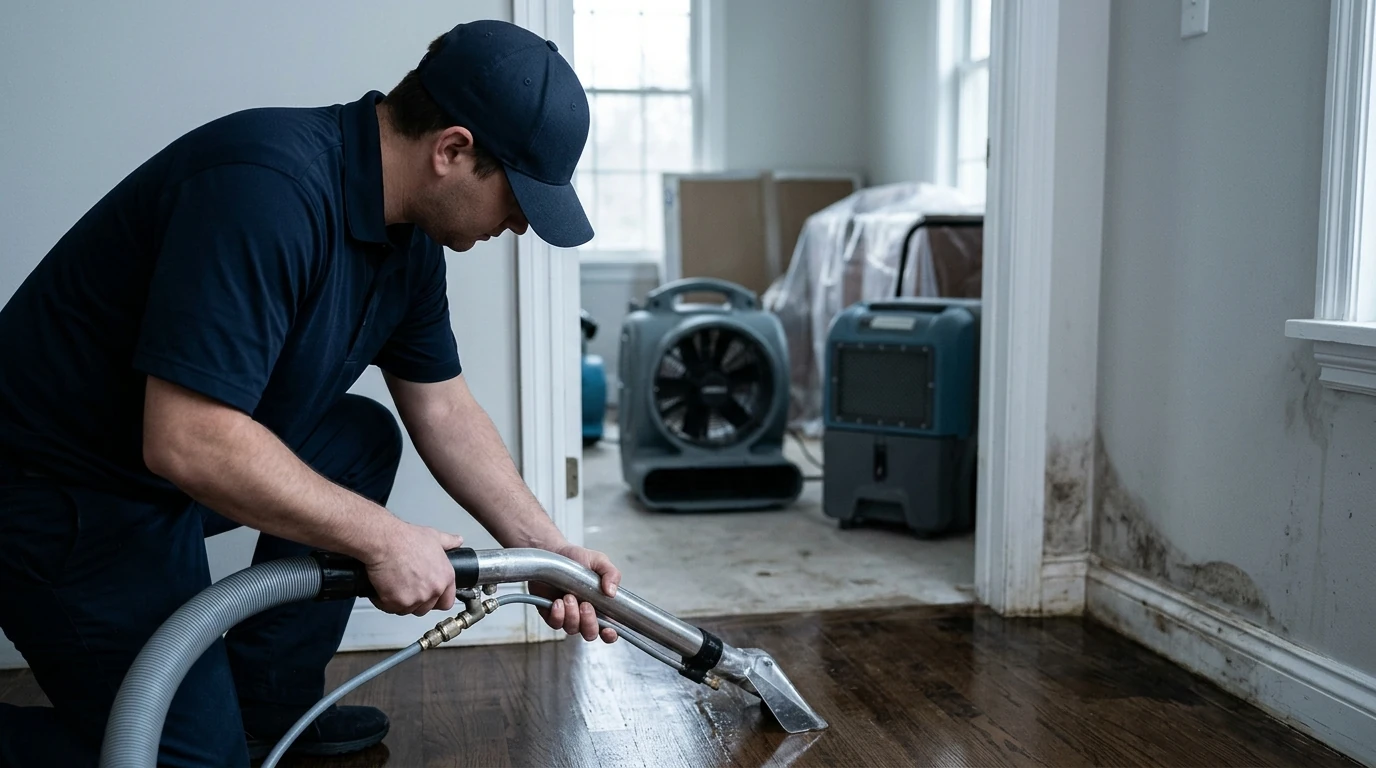
- Water assessment. If water reached flooring, drywall, or a ceiling, that’s a separate scope: extraction, air movers, and a dehumidifier run until moisture readings confirm the structure is dry.
- Rebuild, if needed. Cut drywall, damaged subfloor, or removed baseboard gets replaced once the area tests dry.
Our burst pipe checklist covers exactly what to do in the first ten minutes, before anyone arrives.
If the burst pipe has already caused water damage, QCI Restoration can handle the mitigation and the plumbing fix under one roof. That’s the idea behind “One Call Does It All”: one phone call covers the emergency shutoff, the water extraction, and the drywall repair that follows, with a written scope provided before any work begins. Every job is different, and the final price depends on what the technician finds once the water’s off.
About QCI Restoration
QCI Restoration serves Auburn and the surrounding Central Massachusetts and Greater Worcester communities, operating 24/7 for emergency calls. Its crews handle the full range of what a plumbing emergency can turn into, from water extraction and drying to the reconstruction that follows, so homeowners aren’t coordinating a plumber, a drying company, and a contractor separately.
Need help now? Call QCI Restoration at (508) 756-8800.