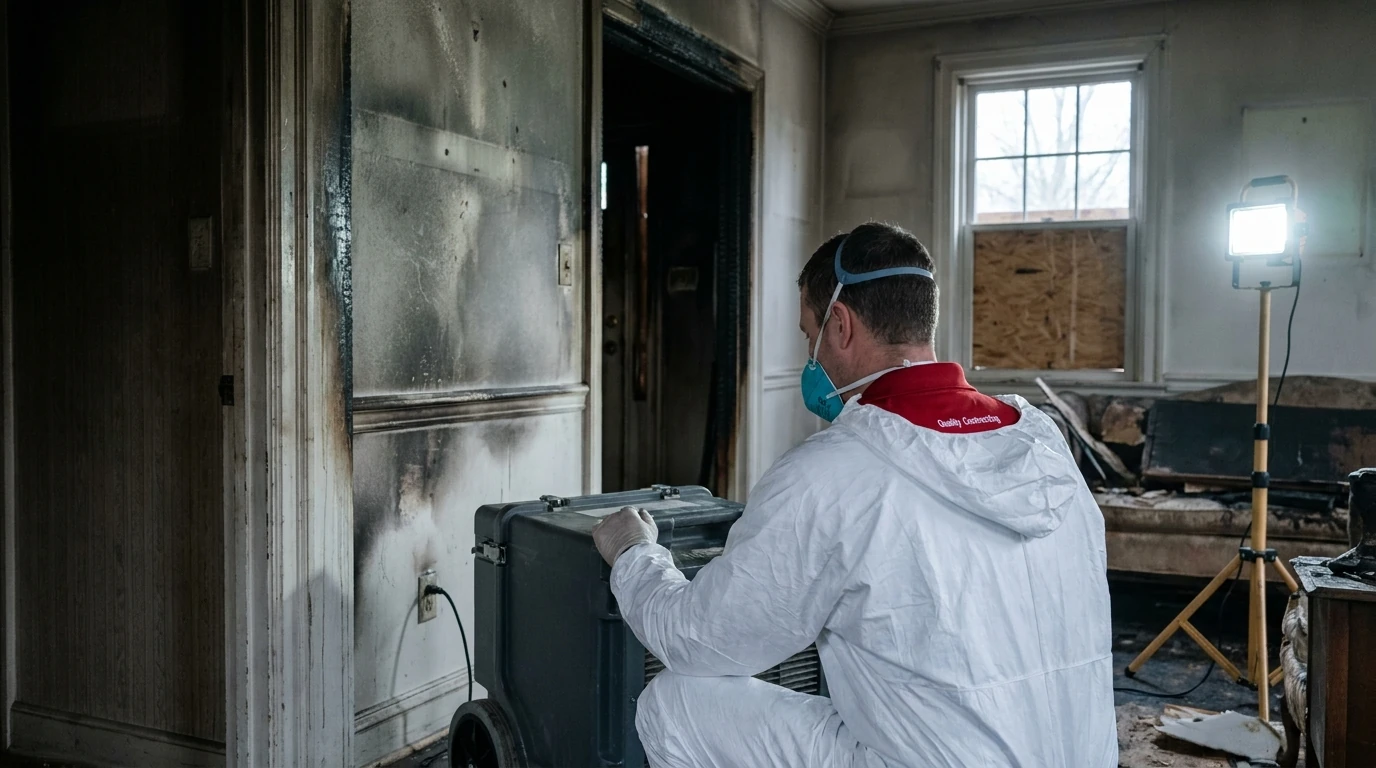
TL;DR: Fire damage restoration in Massachusetts typically costs $1,500 to $4,000 for a contained, single-room smoke cleanup and $60,000 to $150,000 or more for a whole-house rebuild after a structural fire. Mitigation work (board-up, soot and smoke cleanup, water removal from firefighting, odor treatment) usually runs $3 to $8 per square foot. Reconstruction (drywall, electrical, flooring, framing) adds another $15 to $50 per square foot depending on how much of the structure burned.
If a grease fire just charred your kitchen cabinets, or an electrical fault burned through a bedroom wall in your Auburn home, you’re probably staring at two numbers right now: what your insurance company says it will pay, and what you’ll actually owe out of pocket before your family can move back in. The honest answer is that it depends on how far the fire traveled and how much smoke and water followed it, but the ranges below reflect what Central Massachusetts homeowners are paying in 2026.
How much does fire damage restoration cost in Massachusetts?
Most Massachusetts homeowners pay somewhere between $1,500 and $150,000 for fire damage restoration, with the number driven almost entirely by how much of the structure the fire actually touched versus how much was only exposed to smoke and soot.
A fire that stays contained to one appliance or one wall is a very different job from one that burns through framing, melts wiring, and sends soot into every room through the HVAC system. Here’s how that typically breaks down for homes in Auburn and the surrounding Worcester County towns:
| Job Scenario | Typical Cost Range |
|---|---|
| Minor smoke/odor only, no structural damage (single room) | $1,500 - $4,000 |
| Contained kitchen or appliance fire (cabinets, counters, one room) | $8,000 - $20,000 |
| Single room with structural char (studs, subfloor exposed) | $10,000 - $25,000 |
| Multi-room fire with smoke carried throughout the home | $30,000 - $60,000 |
| Whole-house fire with major structural loss | $60,000 - $150,000+ |
| Contents cleaning and pack-out (per room, separate from structure) | $500 - $1,500 |
On a per-square-foot basis, the two phases price very differently. Mitigation (the cleanup phase: soot removal, HEPA vacuuming, odor treatment, and drying out water from firefighting hoses) generally runs $3 to $8 per square foot. Reconstruction (demolition of charred materials, new drywall, electrical, flooring, and framing) runs $15 to $50 per square foot depending on how much has to come out and be rebuilt to code. Older colonials and triple-deckers common across Worcester County, with plaster walls and knob-and-tube remnants in some older sections, tend to land toward the higher end once an electrician gets involved.
What drives the cost up or down?
The biggest cost driver is how many separate systems the fire damaged, not just the square footage burned. A fire that stays on one appliance is cheap; a fire that forces an electrical panel replacement is not.
A few things move the number most:
- How far the fire spread. A wall fire that’s caught early costs a fraction of one that gets into the attic or between floors.
- What burned. Synthetic materials (foam cushions, carpet, vinyl) release thicker, harder-to-remove soot than wood or paper, which raises cleaning time and odor-treatment cost.
- Water from firefighting. Nearly every structure fire gets soaked by hose streams, which means a Category 2 or 3 water mitigation job gets layered on top of the fire cleanup, with its own drying equipment and timeline.
- How fast cleanup starts. Soot is acidic. Left on metal fixtures, glass, and grout for more than a few days, it etches and discolors surfaces that could otherwise have been cleaned instead of replaced.
- Code-required upgrades. If electrical, plumbing, or smoke-detector wiring has to be opened up during rebuild, Massachusetts building code may require those systems be brought up to current standard, which adds cost the original fire didn’t technically cause.
Does homeowners insurance cover fire damage in MA?
Yes. A standard HO-3 homeowners policy lists fire as a named covered peril, and it typically pays for the dwelling, detached structures like a garage or shed, damaged contents, and additional living expenses while the home is unlivable, according to the Insurance Information Institute.
What trips people up is the deductible and the documentation. Massachusetts homeowners commonly carry a $500 to $2,500 deductible, and the adjuster will want photos and a written scope before demolition starts, not after. Photograph every room before anything gets thrown away, including items that look obviously ruined.
One more thing worth knowing before you sign a contract: Massachusetts caps the upfront deposit a home improvement contractor can collect at one-third of the total contract price on jobs over $1,000, per the state’s Home Improvement Contractor rules. Any contractor asking for half or more down before work starts isn’t following state guidance.
QCI Restoration writes a documented scope and works directly with the adjuster on the claim, so the insurance side and the rebuild side stay coordinated instead of becoming two separate fights.
What actually happens during a fire restoration job?
A fire restoration job moves through mitigation first and reconstruction second, usually in this order:
- Board-up and tarping to secure broken windows, a damaged roof, or an exposed wall so the property isn’t exposed to weather or entry while work is scheduled.
- Assessment and written scope, documenting every affected room for the insurance file before anything is removed.
- Water extraction and structural drying, since firefighting water has usually soaked flooring, drywall, and insulation and needs to come out before mold becomes a second problem.
- Soot and smoke cleanup, using HEPA vacuuming and chemical sponges on salvageable surfaces, and removing anything too charred or saturated to clean.
- Odor removal, typically thermal fogging or hydroxyl generators to neutralize smoke odor trapped in porous materials like drywall and subfloor.
- Contents restoration or pack-out, cleaning or storing furniture, textiles, and belongings off-site while the structure is worked on.
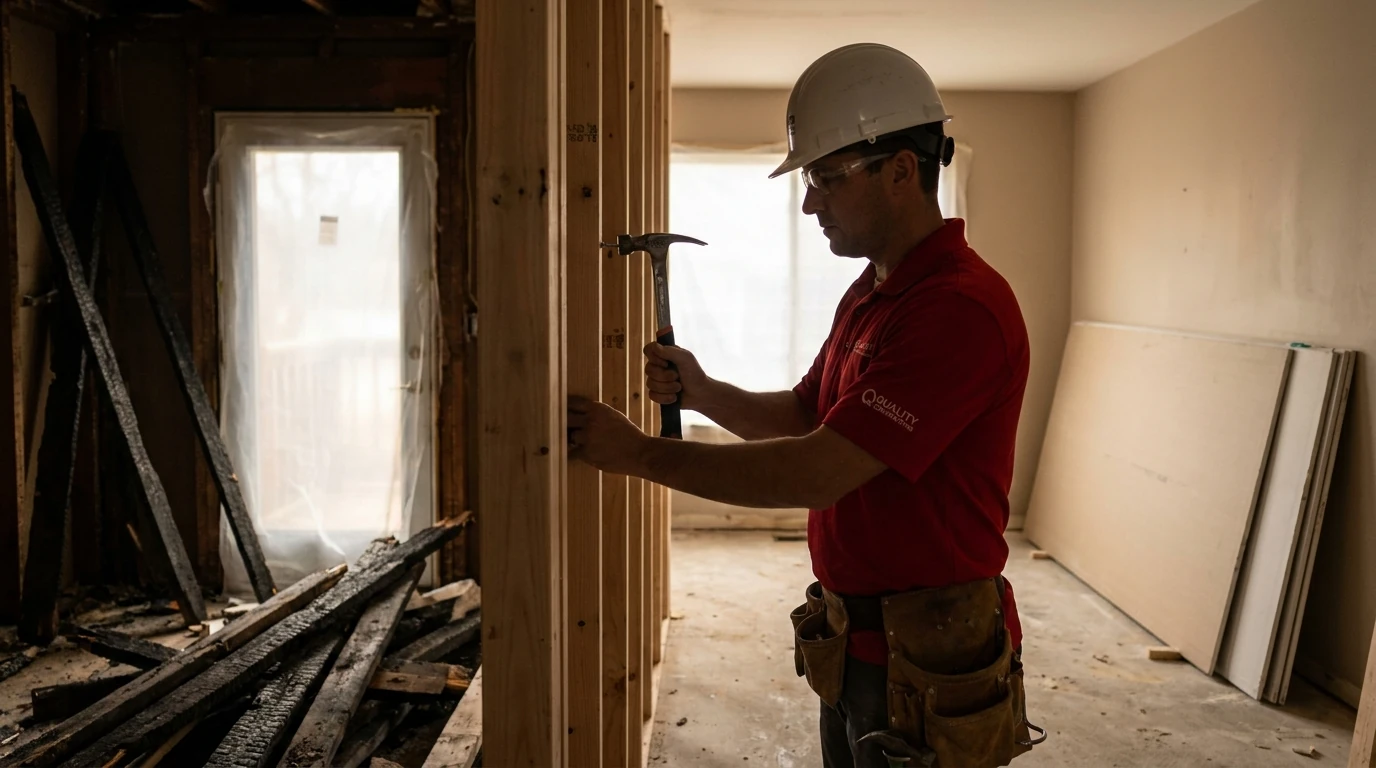
- Reconstruction, rebuilding drywall, electrical, flooring, and trim back to pre-loss condition, or better if code upgrades are required.
For a closer look at what that timeline looks like week by week, see the fire damage restoration process explained.
A fire doesn’t stay in its own lane; it drags in water damage, smoke odor, contents cleaning, and a full rebuild all at once. That’s the whole point of QCI Restoration’s One Call Does It All model: one phone call covers the board-up, the mitigation, the odor treatment, and the general contracting rebuild, so an Auburn homeowner isn’t managing four separate vendors while also filing an insurance claim.
About QCI Restoration
QCI Restoration is rated 4.5 stars across 112 Google reviews and serves Auburn, Worcester, and the surrounding Central Massachusetts towns with 24/7 emergency response. Their technicians handle fire damage restoration, odor removal, contents restoration, and the full general contracting rebuild under one roof, so a fire loss moves from board-up to finished reconstruction without handing the job off between separate companies.
Need help now? Call QCI Restoration at (508) 756-8800.