TL;DR: Mold remediation in Auburn, MA typically costs $500 to $1,500 for a small, contained spot and $6,000 to $15,000 or more for a whole-house job. Basement and crawl space remediation usually fall between $1,500 and $6,000 depending on square footage and how much material has to be removed. Final cost depends on the size of the affected area, how porous the damaged materials are, and whether rebuild work is needed after remediation.
If you just got a mold inspection report back and you’re staring at a number you weren’t expecting, you’re not alone. Most homeowners in Auburn and Worcester County find mold the same way: a musty smell in the basement, a water stain that turned fuzzy, or a home inspector’s report before a sale. The cost swings wildly between a quick containment job and a full-structure remediation, and the report alone usually doesn’t explain why. Here’s what actually drives the number, broken down by the scope of work you’re likely facing.
How Much Does Mold Remediation Cost in Auburn, MA?
Most Auburn homeowners pay between $500 and $15,000 for mold remediation, with the bulk of residential jobs landing in the $1,500 to $6,000 range. The low end covers a small, contained spot on a single surface. The high end covers extensive growth across multiple rooms, framing, and insulation that needs to come out and be replaced.
| Job Scope | Typical Cost Range |
|---|---|
| Small, contained area (under 10 sq ft) | $500 - $1,500 |
| Bathroom or single enclosed room | $1,500 - $3,000 |
| Crawl space mold remediation | $1,500 - $4,500 |
| Basement mold remediation | $2,000 - $6,000 |
| Attic mold remediation | $1,500 - $4,000 |
| Whole-house or extensive remediation | $6,000 - $15,000+ |
These are typical industry ranges, not a quote. Every property is different, and the only way to get an accurate number for your home is a written scope after an in-person assessment.
What Drives Mold Remediation Cost Up or Down?
The single biggest factor is how much material has to be physically removed versus cleaned in place. Non-porous surfaces like tile, glass, and metal can often be cleaned and disinfected. Porous materials like drywall, insulation, and carpet padding usually have to be cut out and replaced because mold grows into the material itself, not just on top of it.
A few other variables move the price:
- Square footage and how many rooms are affected. A single bathroom corner costs far less than mold that’s traveled along framing into an adjacent room.
- Containment complexity. Crews build negative-air containment with poly sheeting and HEPA filtration to keep spores from spreading during removal, per the ANSI/IICRC S520 standard for professional mold remediation. Multi-room or multi-floor containment costs more than a single sealed space.
- Accessibility. Crawl spaces and tight attic framing take longer to work in than an open basement, which adds labor hours.
- Testing and clearance. Pre-remediation testing to identify the scope and post-remediation clearance testing to confirm the air and surfaces are clean both add to the total but protect you from paying for work that didn’t finish the job.
- Rebuild scope. Removing moldy drywall is remediation. Replacing it, repainting, and restoring trim is reconstruction, and it’s priced separately.
How Much Does Basement Mold Remediation Cost?
Basement mold remediation in Auburn typically runs $2,000 to $6,000, more if the growth has reached framing or stored belongings. Basements run higher than other rooms because they combine two cost drivers at once: they’re often the largest contained space in the house, and they’re the most likely to have porous material, exposed wood framing, and groundwater-related moisture feeding regrowth if the source isn’t fixed.
A lot of older homes across Worcester County have fieldstone or block foundation basements that see seasonal dampness even without a flood. If that’s the underlying cause, remediation without addressing the moisture source is a short-term fix. That’s often where a dehumidification plan or crawl space encapsulation approach gets paired with the cleanup.
How Much Does Attic and Crawl Space Mold Remediation Cost?
Attic mold remediation typically runs $1,500 to $4,000, and crawl space remediation runs $1,500 to $4,500, both driven more by access difficulty than square footage. Crews working in a 3-foot crawl space or a tight attic truss bay move slower than in an open room, and that labor time shows up in the price.
Attic mold is most often linked to poor roof ventilation or a bathroom exhaust fan venting into the attic instead of outside, both of which need to be corrected or the mold comes back. Crawl space mold is almost always a moisture problem first: a dirt floor without a vapor barrier, or standing water after rain. If that’s the root cause, remediation alone won’t hold, and encapsulation is usually the actual fix.
Will Homeowners Insurance Cover Mold Remediation?
Homeowners insurance usually covers mold remediation only when the mold is the direct result of a sudden, covered event, like a burst pipe, not when it results from long-term humidity, a slow leak, or deferred maintenance. Most standard policies either exclude gradual mold growth entirely or cap mold-related payouts at a specific dollar limit, often far below what extensive remediation costs, as outlined in the Insurance Information Institute’s overview of standard homeowners coverage.
The practical difference between a covered and denied claim usually comes down to documentation: when the water source failed, how fast it was addressed, and whether the moisture was ongoing or a one-time event. That’s part of why a written scope and photo documentation from the start matters, regardless of who ends up paying.
What Happens During a Mold Remediation Job?
A typical remediation job moves through five phases, usually completed in a few days to about two weeks depending on scope:
- Inspection and testing. A technician identifies the extent of growth, the moisture source, and whether air or surface samples are needed before work starts.
- Containment setup. Poly sheeting and negative-air machines isolate the work area so spores don’t spread to clean parts of the home during removal.
- Removal of affected material. Porous materials that can’t be cleaned, drywall, insulation, carpet, are cut out and bagged for disposal.
- HEPA cleaning and air scrubbing. Remaining surfaces are HEPA-vacuumed and treated, and air scrubbers run to pull spores out of the air.
- Clearance testing and rebuild. A final check confirms the space is clean, then drywall, insulation, and finishes go back in. If you’ve seen conflicting advice online about whether something is actually mold, our guide on black mold versus regular mold walks through how to tell the difference before you pay for testing.
What Should I Know Before Signing a Mold Remediation Contract?
In Massachusetts, a registered home improvement contractor cannot legally require more than one-third of the total contract price as a deposit before work begins, under the state’s Home Improvement Contractor law. That protects you from paying most of the job upfront before any work has started.
Before signing anything, get the scope of work in writing: what’s being removed, what testing is included, and what the rebuild covers. The Massachusetts Office of Consumer Affairs HIC program is the place to verify a contractor’s registration before you sign.
Mold remediation, the crawl space or moisture fix behind it, and the rebuild afterward are often three different scopes of work, and the headache for most homeowners is coordinating three different contractors for three different invoices. One Call Does It All is built around not doing that: one phone call covers the inspection, the remediation, and the reconstruction that follows, under one scope and one point of contact.
About QCI Restoration
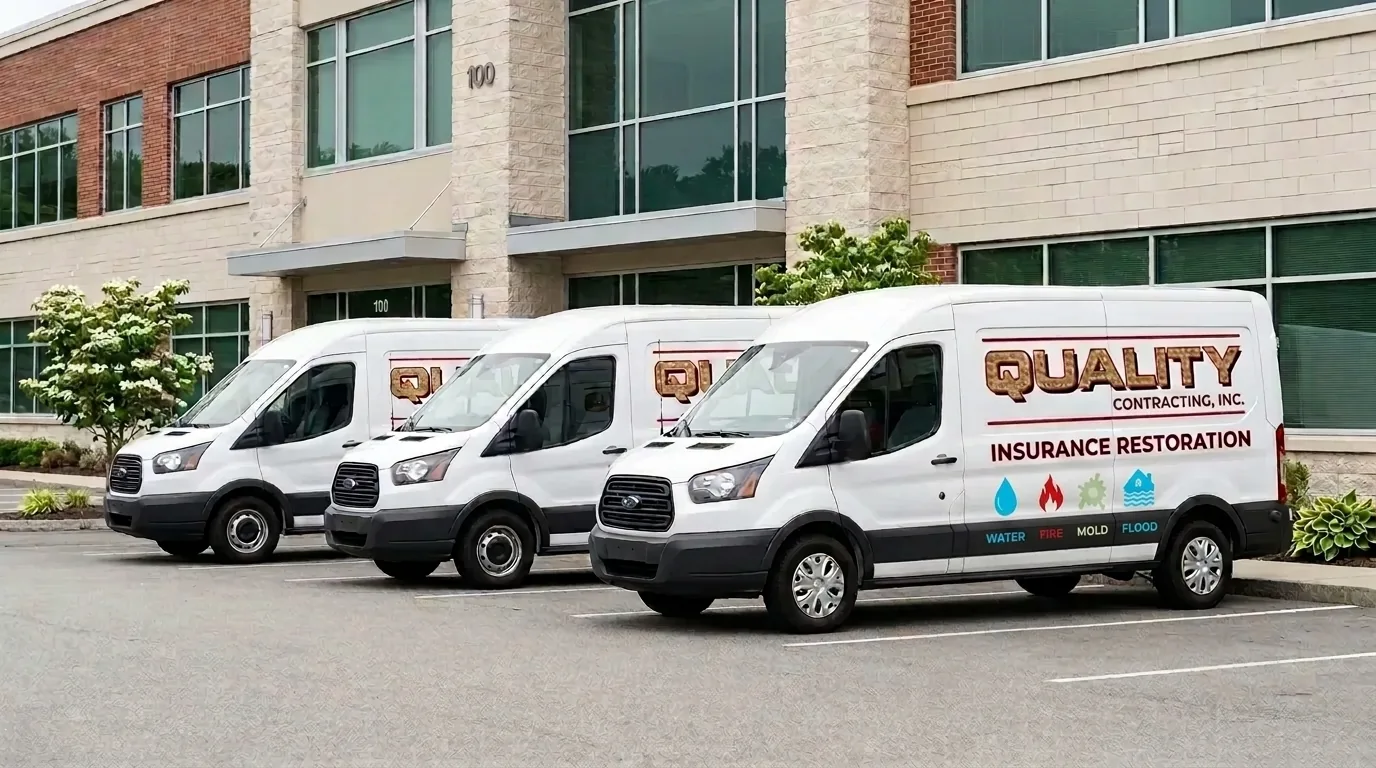
QCI Restoration (Quality Contracting, Inc.) is headquartered in Auburn, MA, and serves Central Massachusetts and Greater Worcester with 24/7 emergency response. The company’s crews handle mold remediation, crawl space encapsulation, and the general contracting work needed to rebuild afterward, alongside water, fire, storm, and biohazard restoration services. QCI Restoration holds a 4.5-star rating across 115 Google reviews, and remediation work follows the ANSI/IICRC S520 standard for professional mold remediation.
Need help now? Call QCI Restoration at (508) 756-8800.