TL;DR: Water damage mitigation is the emergency work done in the first 24 to 48 hours to stop a loss from getting worse: extracting water, removing ruined materials, and setting drying equipment. Water damage restoration is the repair and rebuild phase that follows, from drywall and flooring to full reconstruction. Insurance estimates almost always separate the two, and knowing the difference helps you read your claim correctly.
If your adjuster’s estimate has a line that says “mitigation” and a separate section that says “repairs” or “reconstruction,” you’re not imagining a typo. Those are two distinct phases of the same claim, often billed, approved, and scheduled on different timelines. Homeowners usually assume “mitigation” and “restoration” mean the same thing until they’re staring at a claim document that treats them as two separate jobs with two separate dollar amounts.
What’s the Difference Between Water Damage Mitigation and Restoration?
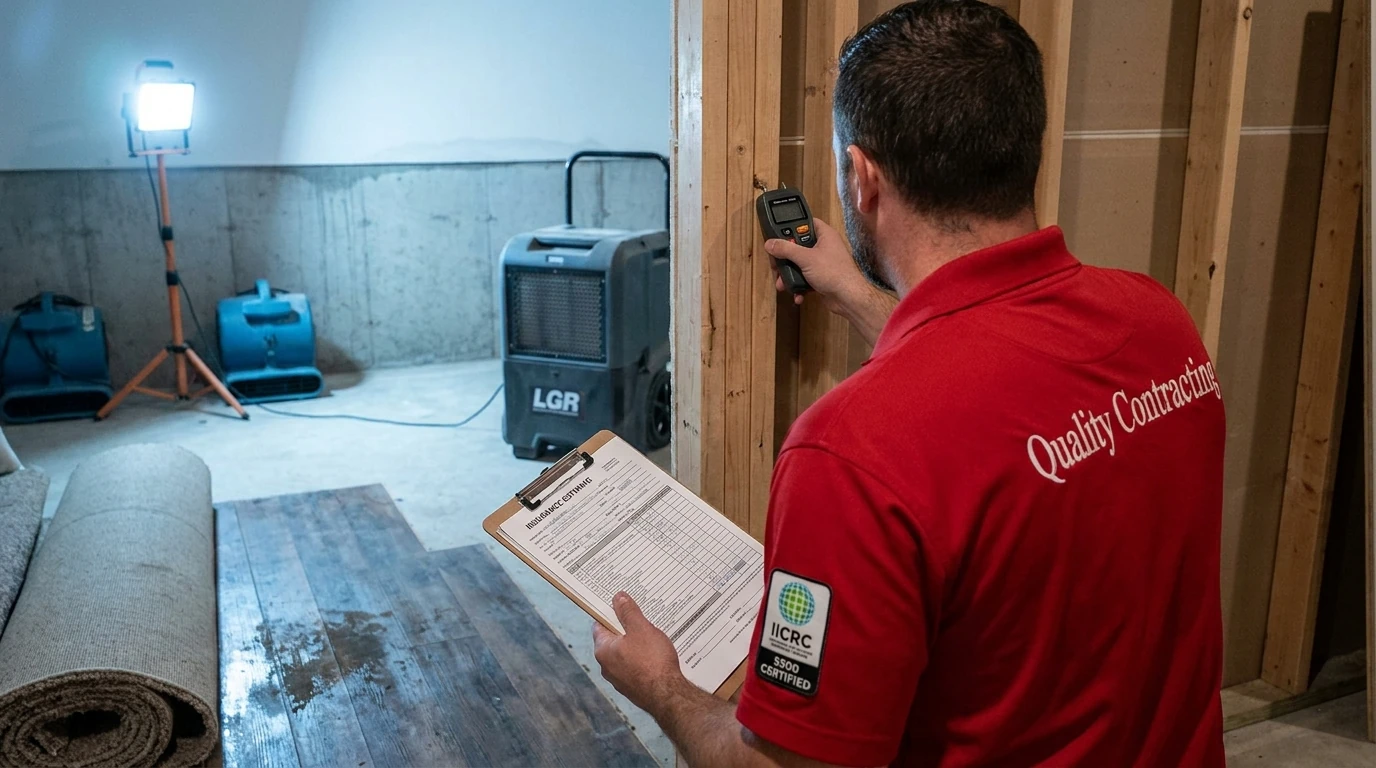
Mitigation is the emergency response that stops a water loss from spreading: pulling standing water, removing materials that can’t be saved, and placing air movers and dehumidifiers to dry the structure. Restoration is everything that happens after the structure is dry: replacing drywall, flooring, trim, cabinetry, and in larger losses, full reconstruction of walls, ceilings, or rooms.
Think of mitigation as triage and restoration as the rebuild. A plumber’s technician doesn’t rebuild your kitchen, and a mitigation crew doesn’t hang new drywall as part of the same scope. On paper, mitigation follows IICRC S500 drying standards, the industry guideline for water damage response, while restoration follows standard construction trade practices.
This split matters because it’s not just terminology. On most insurance estimates, mitigation and restoration are priced, approved, and sometimes paid out as two separate scopes of work.
How Does This Split Show Up on an Insurance Estimate?
On a typical water damage estimate, mitigation appears as its own category, usually labeled “water extraction” or “emergency services,” and it’s often the first money an insurer releases because policies require homeowners to prevent further damage once a loss occurs. Restoration shows up later as a repair or reconstruction scope, broken out by trade: drywall, paint, flooring, carpentry.
Most carriers will authorize mitigation quickly, sometimes before a full adjuster inspection, because every day a wet structure sits unaddressed raises the risk of secondary damage like mold or warped framing. Restoration typically waits on an approved scope of repairs, which means the adjuster or an estimating software report has to confirm what was damaged and what it costs to put back.
This is also where homeowners get stuck coordinating pieces themselves: one company does the extraction and drying, a different plumber fixes the source, and a general contractor does the rebuild, with the homeowner relaying information between all three. Our water damage restoration crews carry a claim from the first extraction through the final repair under one scope, which keeps the mitigation invoice and the restoration estimate working off the same documentation instead of three separate paper trails.
Can You Stay in the House During Mitigation and Restoration?
Most homeowners can stay in the home during mitigation if the water is clean (what the industry drying standard calls Category 1) and contained to one area, like a single bathroom or basement corner. You’ll have noise from air movers and dehumidifiers running around the clock, but the rest of the house usually stays livable.
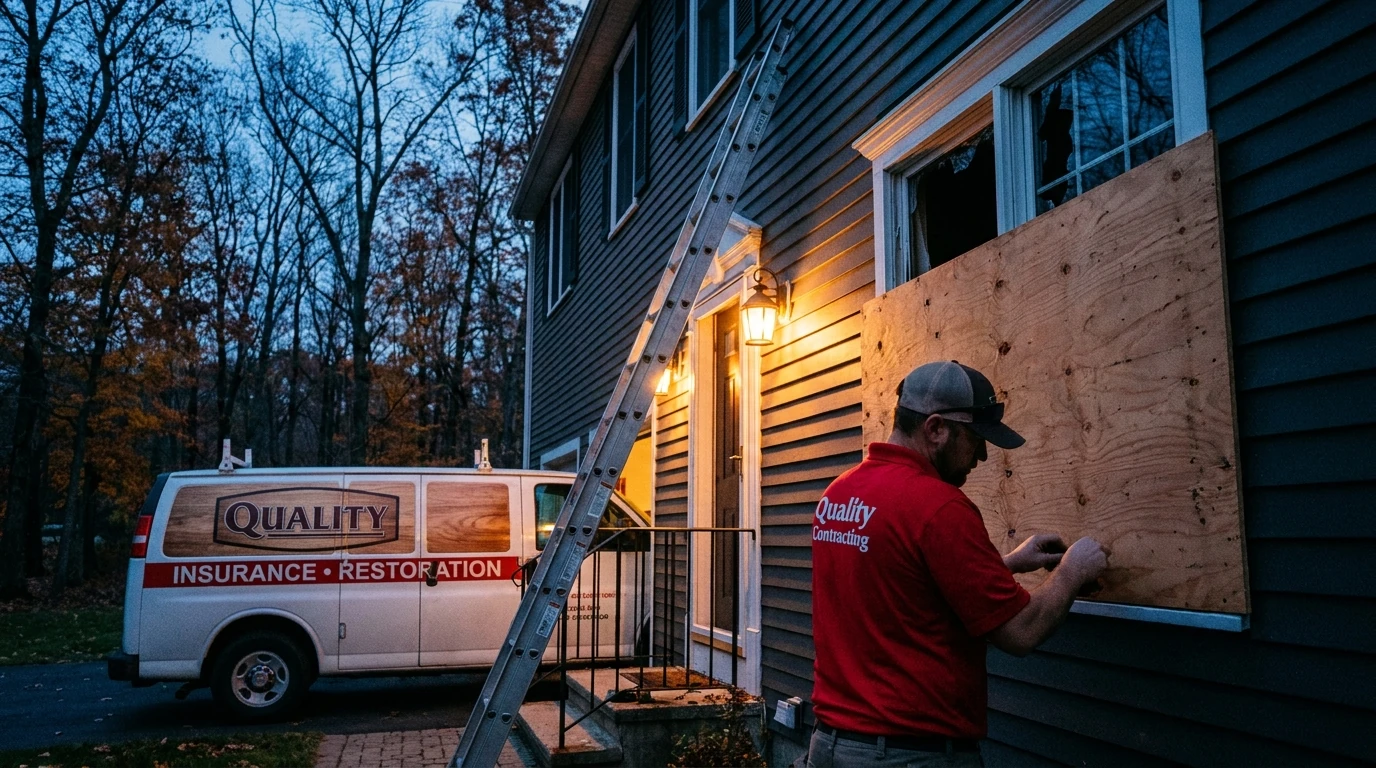
You typically need to leave only when the water is contaminated (sewage or flood water, Category 3), when demolition is extensive, or when a damaged roof or wall leaves the structure exposed. In those cases, a crew may need to board up or tarp an opening before mitigation can even start, which is its own line item separate from both drying and rebuild work. Restoration, especially a full room rebuild, is more likely to require you to vacate that space, though adjoining rooms often stay usable.
How Long Does Each Phase Take?
Mitigation usually runs three to five days: drying equipment stays in place until moisture meter readings in the walls, subfloor, and framing return to a dry standard, not just until the surface feels dry to the touch. Restoration timelines vary far more, from a single day to patch one section of drywall up to several months for a full structural rebuild after a major loss.
The gap between those two numbers is exactly why claims stall. A homeowner who hires one company for mitigation and has to then find, vet, and schedule a separate contractor for restoration can lose weeks just transferring the file and re-explaining the damage.
What Should You Do When Your Adjuster Mentions “Mitigation”?
Ask directly whether the mitigation company and the restoration contractor are the same business, because that handoff is where most claims lose time. If they’re different companies, you’re the one responsible for making sure the drying documentation, moisture logs, and photos actually reach whoever quotes the rebuild.
This is the problem our “One Call Does It All” model is built around: one point of contact handles the emergency mitigation, the water and fire cleanup if needed, the plumbing repair, and the complete rebuild, so you’re never relaying your own claim history between separate vendors. We’ve written more on what homeowners insurance actually covers for water damage and what to do in the first 24 hours after a loss if you’re earlier in the process than the estimate stage.
If you’re holding an estimate right now and aren’t sure which line items apply to your situation, Call QCI Restoration at (508) 756-8800 and a technician can walk through the scope with you before work starts.
About QCI Restoration
QCI Restoration serves Auburn, MA and Central Massachusetts with 24/7 emergency response for water damage mitigation and restoration. Its technicians work to IICRC S500 drying standards and carry claims from the first extraction through final reconstruction under one scope, the “One Call Does It All” approach. The company holds a 4.5 rating across 110 Google reviews from the communities it serves.