TL;DR: Sewage backup cleanup cost depends on how much space the water reached, how long it sat, and how much demolition it forces, not a flat per-job rate. Category 3 water (sewage) always costs more to clean up than clean water because contaminated porous materials must be removed, not dried. Most standard homeowners policies exclude sewer backups unless you added a water backup (sewer/sump) endorsement, so check your policy before you assume coverage.
If your basement floor drain just backed up during a heavy rain, or your toilet won’t stop overflowing and you’re standing in a finished basement in Auburn wondering what this is going to cost before you even call your insurance agent, you’re not alone. Auburn has a lot of mid-century capes and ranches with basement floor drains tied to aging clay or cast iron laterals, and those lines are exactly the kind that back up when roots intrude or the line can’t keep up with a storm. The honest answer on price: it depends almost entirely on how far the water traveled and what it touched.
What determines the cost of sewage backup cleanup?
The main cost drivers are square footage affected, how deep the water got, and whether the space is finished or unfinished. An unfinished utility area with a concrete floor and a few inches of standing water near the floor drain is a far smaller job than a finished basement with carpet, drywall, and a drop ceiling soaked through.
Time matters too. Sewage that sits for hours before anyone notices soaks deeper into subfloor, baseboards, and wall cavities than water caught within the first hour. The longer the dwell time, the more material has to come out rather than just be cleaned.
Contents play a role as well. A finished basement used as a rec room, with a couch, rugs, and a game console sitting in the path of the water, adds contents assessment, pack-out, and either cleaning or disposal to the scope. A bare mechanical room with a water heater and some storage shelving does not.
Why does Category 3 water cost more than clean water cleanup?
Category 3 water, also called black water, is grossly contaminated per the IICRC S500 standard, and any sewer or drain backup falls into that category regardless of how clear the water looks. That classification changes almost every step of the job compared to a clean-water loss like a burst supply line.
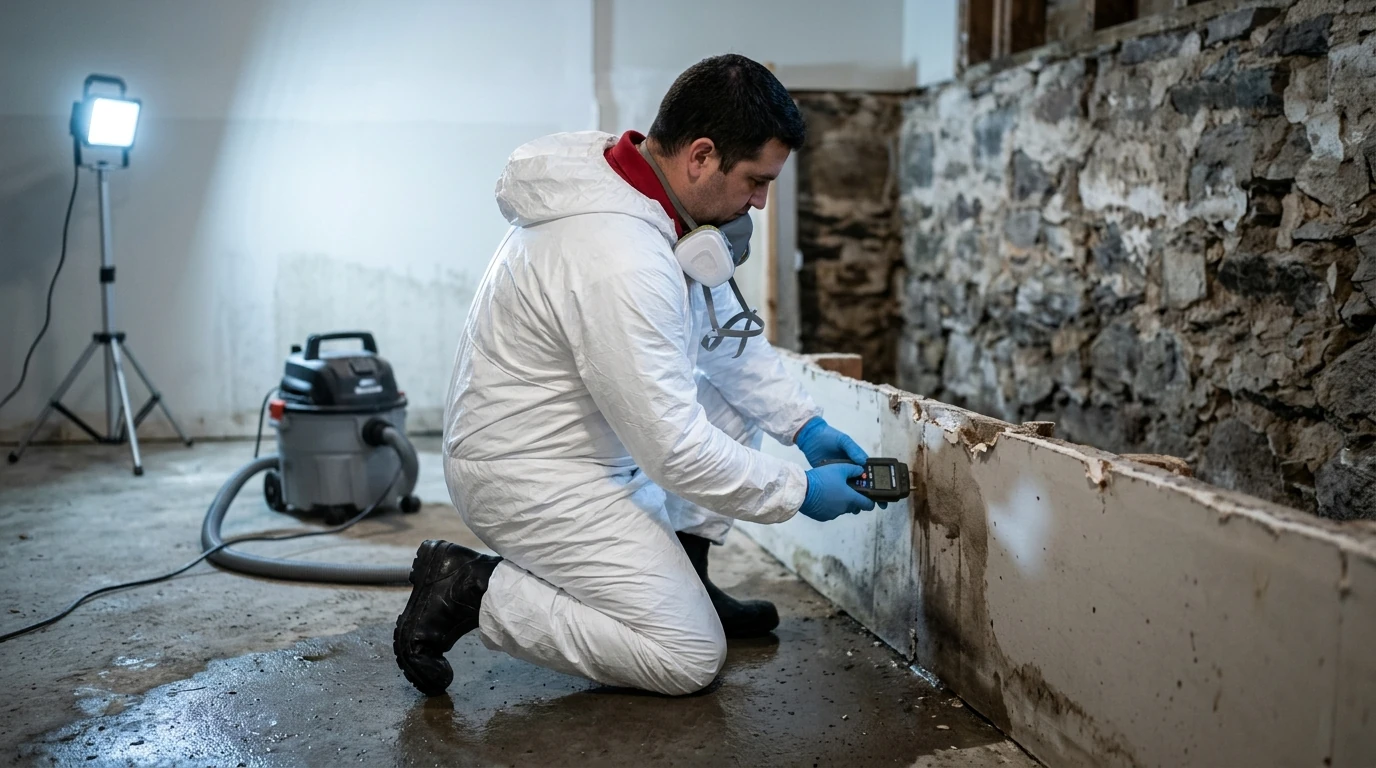
Technicians working a Category 3 loss wear PPE (gloves, waterproof boots, and often respiratory protection) the entire time. Porous materials the water touched, carpet, pad, drywall, insulation, and most contents, generally get removed and disposed of rather than dried in place, because you can’t fully disinfect a soaked piece of drywall or carpet pad. Disposal of contaminated material also has to follow specific handling practices, which adds labor and dump fees that a clean-water job doesn’t carry. All of that is why a sewage backup in the same basement, same square footage, typically costs more than a comparable clean-water flood.
What materials get removed, and what can be saved?
Most porous materials that contacted sewage have to be removed, while hard surfaces and structural framing can often be cleaned, disinfected, and kept. Expect contaminated carpet and pad, affected drywall (usually cut back a foot or more above the visible waterline), wet insulation, and soaked porous contents to come out.
What often survives: concrete and tile flooring, solid wood or metal furniture that’s cleaned and disinfected rather than discarded, and framing lumber once it’s dried and treated. A sewage cleanup crew should walk the space room by room and document what’s salvageable before anything is removed, both for the insurance file and so you’re not losing things that didn’t need to go.
What does disinfection, drying, and clearance involve?
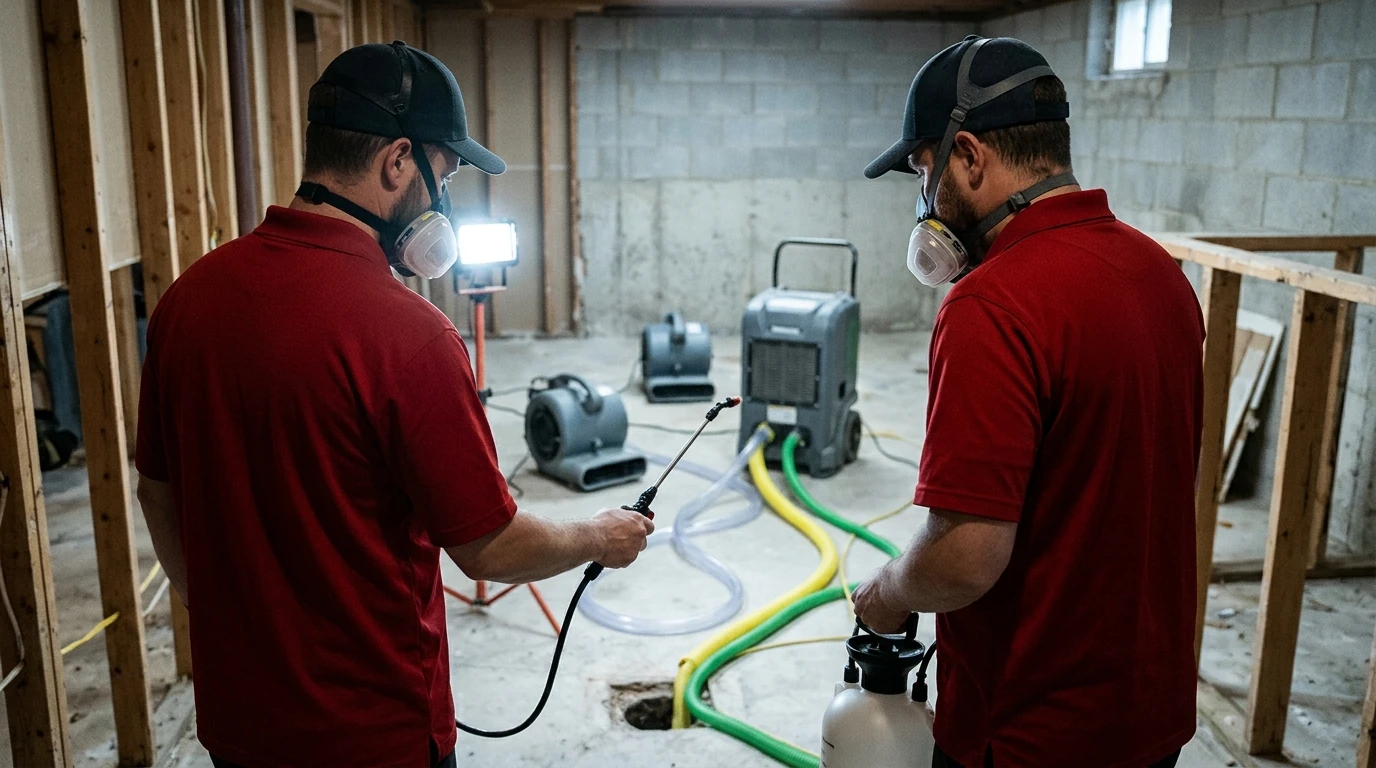
After demolition, the remaining structure gets treated with an EPA-registered antimicrobial and then dried with air movers and dehumidifiers until moisture readings in the affected materials return to a dry standard. How many days that takes depends on how much structure is left to dry and how much moisture got into framing and subfloor; smaller, caught-early losses dry faster than ones where water sat for a day or two.
On larger or more contaminated losses, some contractors recommend a post-remediation check, sometimes called clearance, before rebuild starts, confirming odor and moisture are resolved before drywall goes back up. Lingering sewage odor after a cleanup usually means either drying wasn’t complete or contaminated material got missed, which is where odor removal work comes in separately from the initial mitigation.
What does the rebuild cost after cleanup depend on?
Rebuild cost depends on how much demolition occurred during mitigation and whether the space was finished before the loss. A basement that loses a few feet of drywall and some carpet rebuilds faster and cheaper than one that loses full wall sections, flooring, a bathroom vanity, or built-in cabinetry.
Some rebuilds also pick up a code-driven item the original build didn’t have, like a backwater valve or an updated floor drain configuration, when the cause of the backup points to an aging lateral. Pairing mitigation and reconstruction under one contractor avoids the common gap where the demo crew and the rebuild crew don’t talk to each other, and nobody owns the finished result.
Does homeowners insurance cover sewage backup cleanup in Massachusetts?
Most standard homeowners policies exclude sewer and drain backups by default; coverage usually requires a separate water backup (sometimes called sewer/sump) endorsement added to the policy. Without that endorsement, a backed-up floor drain or overflowing toilet from a main line clog is typically treated the same way as flood water: not covered.
If you do have that endorsement, it generally covers cleanup and repair up to a set limit, which is often lower than your dwelling coverage, so it’s worth confirming the limit before assuming it covers a large loss. For the broader picture of what a standard homeowners policy does and doesn’t cover, see our plain-English guide to homeowners insurance and water damage. The Insurance Information Institute and NAIC both outline how backup endorsements typically work at a high level; your agent or declarations page will have the actual numbers for your policy.
If you’re still in the moment and haven’t started cleanup yet, our guide on who to call first for a sewage backup in Auburn walks through the order of calls, mitigation company before insurance adjuster in most cases, so you don’t lose time.
Sewage backup cleanup is not a job to price-shop while water is still sitting in your basement. The smarter move is getting a technician on-site to document the scope, start mitigation, and give you a written estimate before demolition goes any further than it has to. That’s the whole idea behind One Call Does It All: QCI Restoration handles the mitigation, the disinfection and drying, the insurance documentation, and the rebuild under one roof, so you’re not managing a mitigation company, a plumber, and a general contractor separately while your basement sits torn open.
About QCI Restoration
QCI Restoration (Quality Contracting, Inc.) serves Auburn and Central Massachusetts, including Worcester, Shrewsbury, and Westborough, from its Auburn headquarters, with crews available 24/7. Technicians follow the IICRC S500 water damage standard on sewage and water losses and coordinate mitigation, contents, and reconstruction under a single scope so homeowners deal with one contractor from the first call through the final rebuild.
Need help now? Call QCI Restoration at (508) 756-8800.